Roof Replacement
Re-roofing Federation and inter-war homes across Parramatta, plus the rear additions built over them.
Learn more →Roof leak repairs across Parramatta: box gutters, slipped terracotta, flashings, valleys and ridge capping. Free inspection, written quote, work warranted.
Re-roofing Federation and inter-war homes across Parramatta, plus the rear additions built over them.
Learn more →Colorbond roofing across Parramatta and Merrylands, including low-pitch and skillion sections on additions.
Learn more →Restoration for Parramatta tile roofs where the terracotta is sound but the pointing and bedding have perished.
Learn more →Box gutter, eaves gutter and downpipe work across Parramatta, the most common cause of ceiling damage on older homes here.
Learn more →Storm response across Parramatta and Granville after hail or heavy runoff, with a same-day make-safe where we can.
Learn more →Roof inspections and written reports across Parramatta for pre-purchase, strata and insurance use.
Learn more →Most people do not call a roofer because of the roof. They call because of a brown ring on the ceiling, a drip into a bucket in the hallway, or a smell of damp in a back bedroom that was not there last winter. The roof is just where the problem started.
In Parramatta that start point is unusually predictable, because the housing stock is. Call (02) 9090 4741 and describe what you can see.
| What you are seeing | Where we usually find it |
|---|---|
| Stain only in heavy rain | Box gutter overflowing, valley blocked, outlet undersized |
| Drip near a chimney or parapet | Flashing lifted, apron corroded, step flashing never lapped properly |
| Stain along one wall | Eaves gutter overflowing behind the fascia, or a rusted gutter back |
| Damp near a ceiling light | Water tracking a batten then dropping at the first penetration |
| Grit in the gutters, small leaks everywhere | Concrete tiles shedding their surface, roof approaching end of life |
| Sudden leak after wind | Ridge cap lifted, tile slipped, flashing peeled back |
None of this is diagnosable from inside the house, and very little of it is visible from the footpath. That is the whole reason the inspection is free — there is no honest way to quote a leak you have not found.
Walk the older streets of North Parramatta, Harris Park, Rosehill or Granville and you will see the same shape again and again: a Federation or inter-war house with a later addition grafted onto the back, and the junction between old roof and new drained by an internal box gutter instead of an eave.
Box gutters are a legitimate detail, but they are unforgiving. The water has nowhere else to go. Under AS/NZS 3500.3 a domestic box gutter needs a minimum sole width of 200 mm, around 30 mm of freeboard so wind cannot push the flow over the side, and an independent overflow that discharges to open air — a side overflow or a high-capacity device at the sump. A gutter that narrows toward the outlet without getting deeper is a defect, not a design choice.
Plenty of what is sitting over Parramatta ceilings right now was installed before any of that was common practice, or was reduced in width by a later renovation that did not think about drainage. When those gutters back up, the water does not spill outside the house. It goes into the roof cavity.
What a box gutter repair usually involves:
Unglazed terracotta is porous. Over decades it absorbs more water, grows lichen in the shaded southern faces, gains weight and loses impact strength. A tile that would have survived a hailstone in 1950 cracks now. Walking an old terracotta roof is a skill in itself, and part of a good repair is not creating three new breakages while fixing one.
Common tile-side repairs:
Rigid mortar matters here. Parramatta sits on Cumberland Plain soils weathered from Wianamatta Group shale, which are moderately to highly reactive clays — they swell wet and shrink dry, and houses on them are commonly classified M or H1 under AS 2870. That seasonal movement works on brittle mortar until it cracks. Flexible pointing is the answer to exactly that condition, and it is why a repoint done properly lasts years longer than a repoint done cheaply.
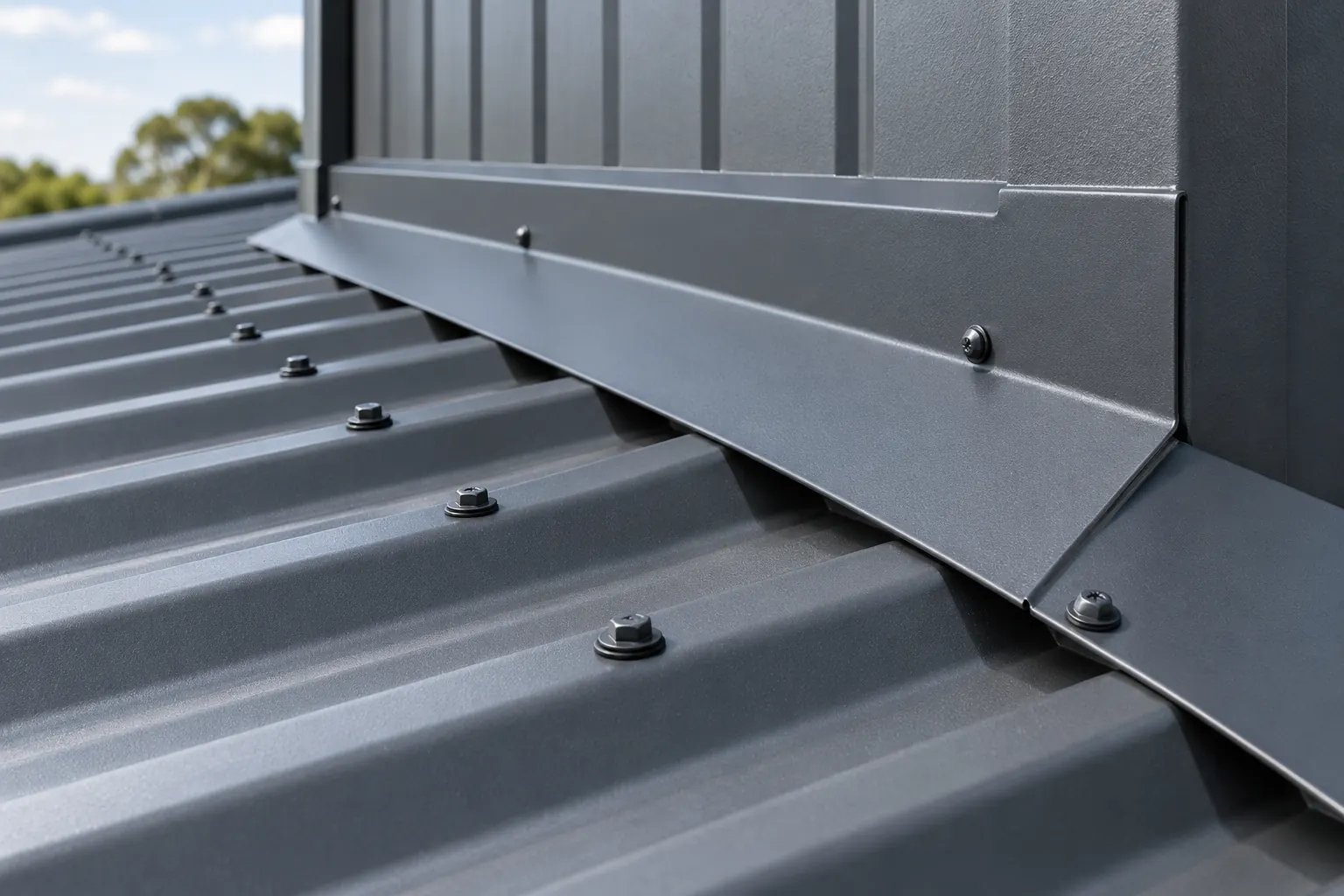
The newer stock around the CBD, Rydalmere, Silverwater and the infill estates is largely sheet steel, and it fails in different places. Fixings backing out or sealing washers perishing. Flashings that were silicone-only and have let go. Capillary action drawing water back up a lap with too shallow a pitch. Corrosion starting under a leaf pile that never got swept off a low-pitch valley.
Sheet roofs are usually quicker to diagnose than tile, because the water path is shorter and the evidence is on the surface. They are also easy to make worse: walking a sheet in the wrong place deforms the ribs and creates the next leak.
Call (02) 9090 4741 if you are not sure which of these you have.
No obligation attaches to any of that. If the honest answer is that nothing needs doing yet, that is the answer you get.
Roof size and pitch, material, and access, in roughly that order. A single-storey tiled roof in Wentworthville with a clear side yard is cheap to get onto. A two-storey Federation house in Harris Park with a parapet, a narrow boundary setback and no scaffold room is not. Then come the complications we find once we are up there: rotted battens under a leak that has been running for years, asbestos-cement sheet beneath a later roof, a box gutter that has corroded through rather than simply blocked.
We will not invent a figure before we have seen it. We will tell you the range the moment we have.
If there is a stain on the ceiling, a tile on the lawn, or a gutter that spills at the same corner every storm, that is enough to start with.
Call (02) 9090 4741 or send through the details. We cover the whole Parramatta service area, and if the roof turns out to be past repair we will say so and walk you through replacement or restoration instead.
It tells us a lot. Drizzle finds holes; heavy rain finds capacity problems. A leak that only shows when the rain is hammering usually means water is arriving faster than something can carry it away — an undersized box gutter, a blocked valley, a downpipe that cannot keep up, or an overflow that was never installed. We start at the drainage rather than hunting for a cracked tile.
Yes, routinely. Water that gets past a tile lands on the sarking or the batten and then runs along the fall of the roof framing until it finds a low point or a ceiling joist to drip off. By the time it marks plasterboard it can be several metres from the entry point. Tracing it back is most of the work in a leak repair, which is why guessing from inside the house rarely helps.
It can be either. If the caps are sound and only a run or two has let go, repointing that section is a straightforward repair. If the mortar bedding has crumbled right along the ridges and hips, as it often has on inter-war terracotta across Harris Park and North Parramatta, you are effectively doing a restoration and it makes more sense to price it that way.
We will tell you plainly what we think and then do what you ask. There are good reasons to patch an old roof — you are selling, you are saving for a re-roof, the budget is not there this year. What we will not do is sell a patch as a permanent fix when the tiles are breaking underfoot. You get both options written down and you decide.
Most single-point repairs are done in a half day to a day: finding the source, making the repair, and testing it. Box gutter work takes longer because it usually involves either re-lining the gutter, enlarging the outlet, or adding a proper overflow, and sometimes all three. If the roof needs to be dry to work on, weather can push the booking rather than the job.
Tell us what you need and we'll get straight back to you. Prefer to talk? Call (02) 9090 4741 and speak to someone local.
Call (02) 9090 4741